Home · Catalogue · Religion & Theology · S.I.8142
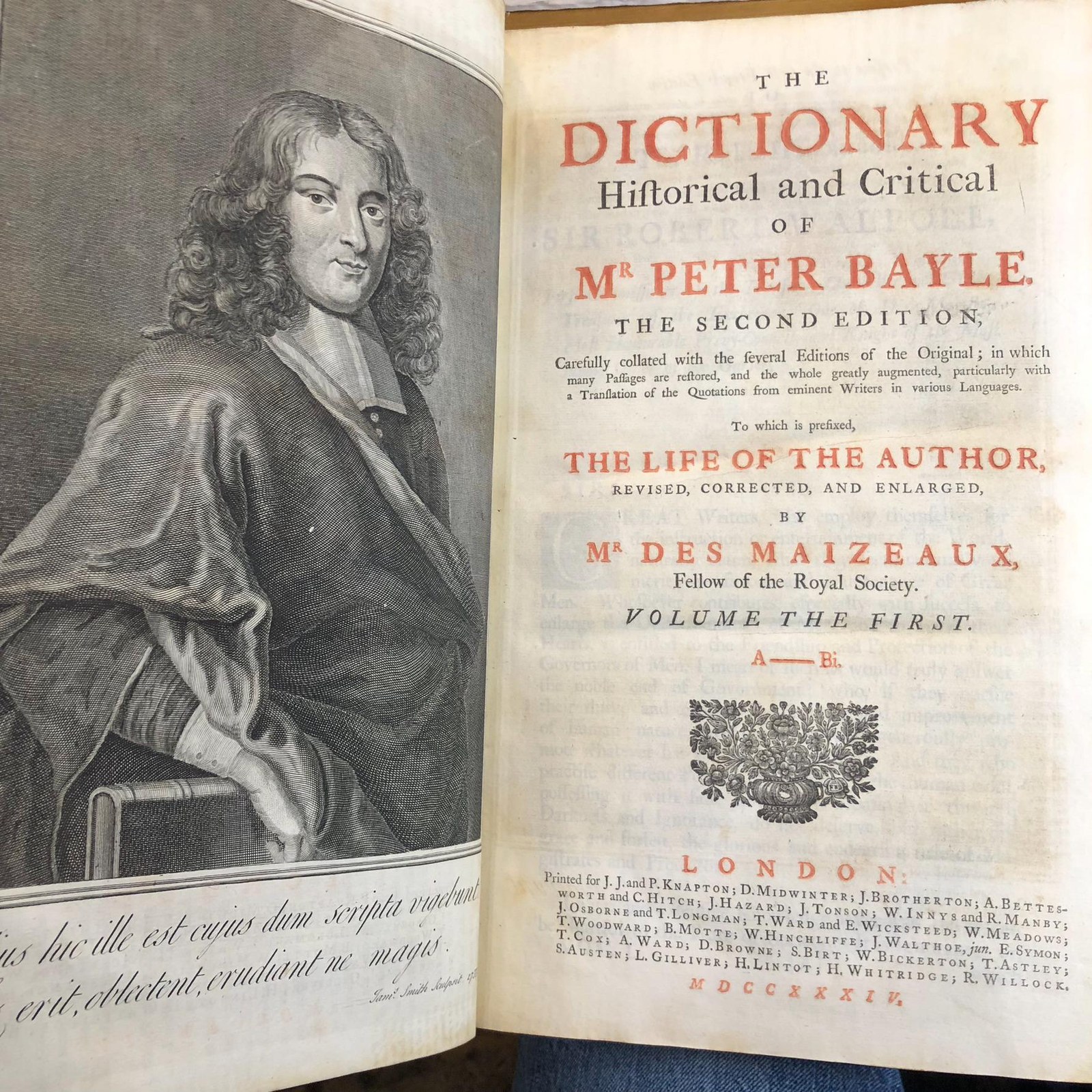
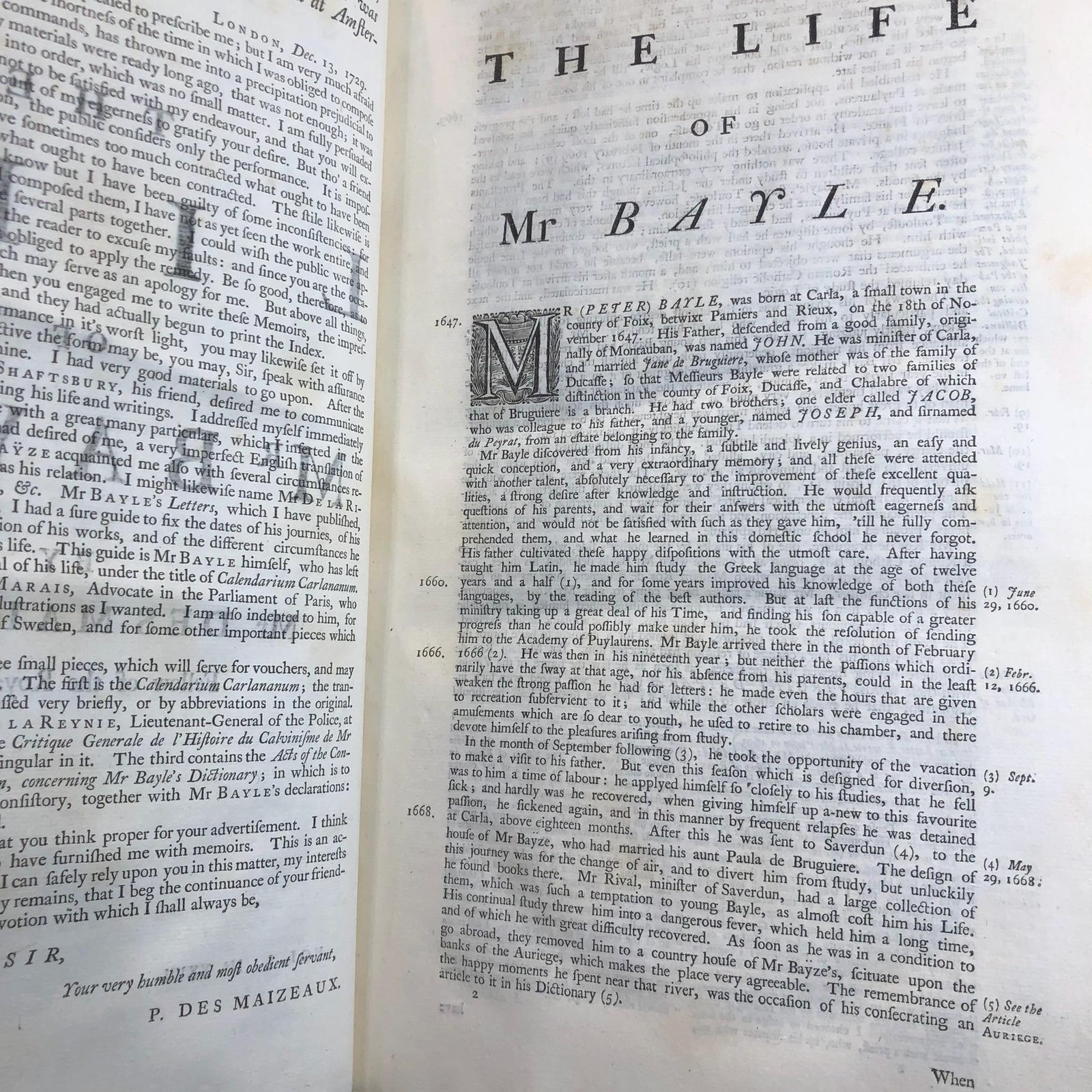
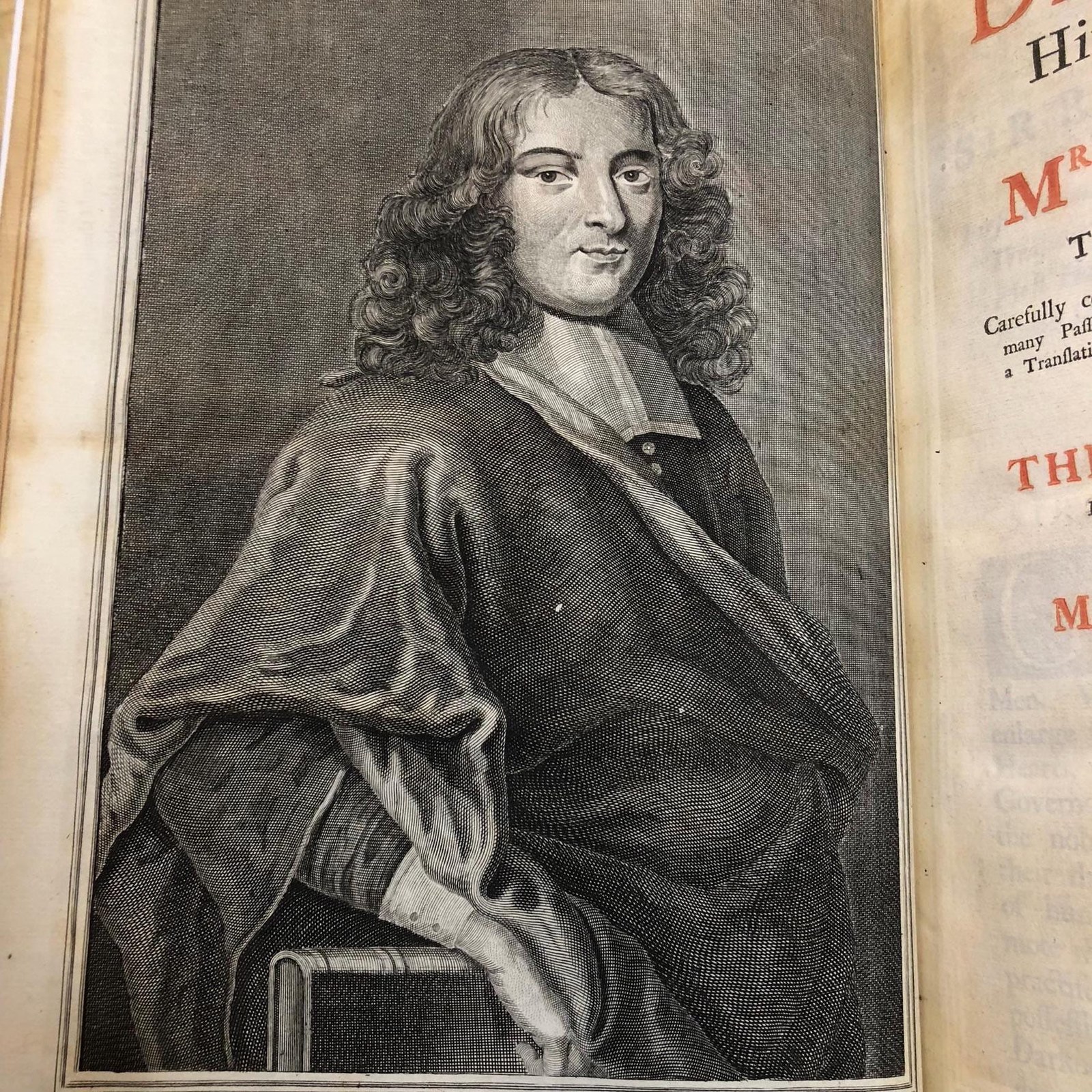
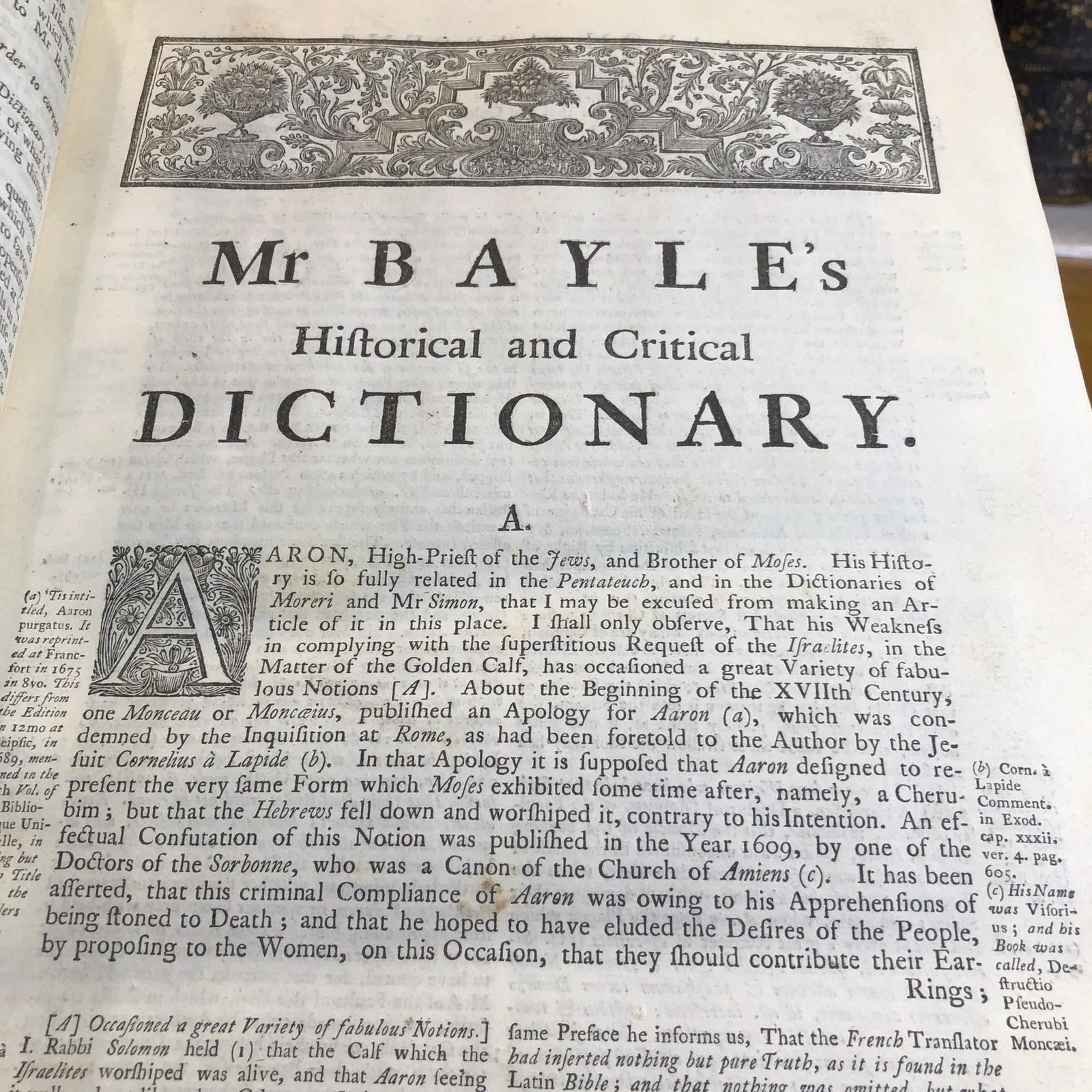
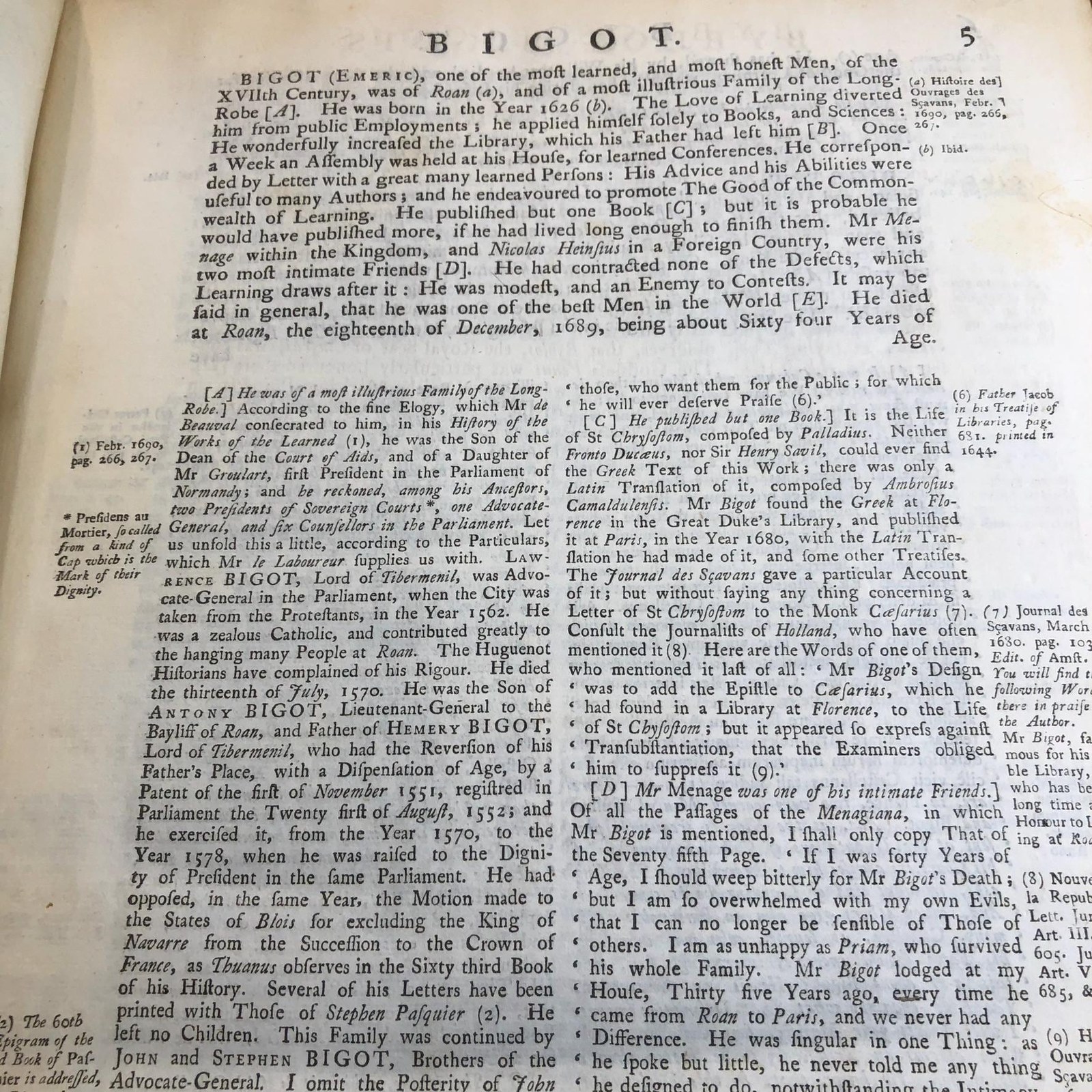
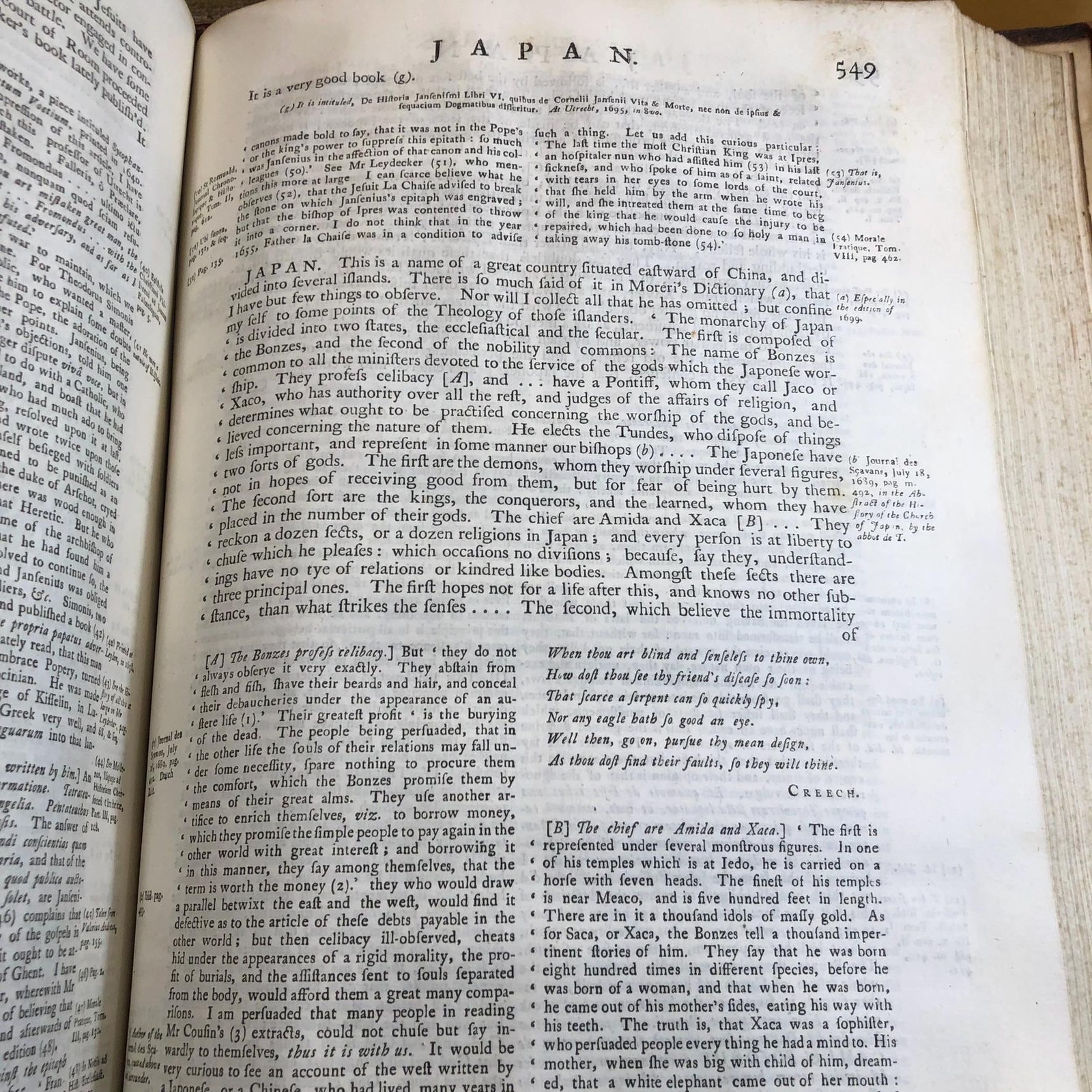
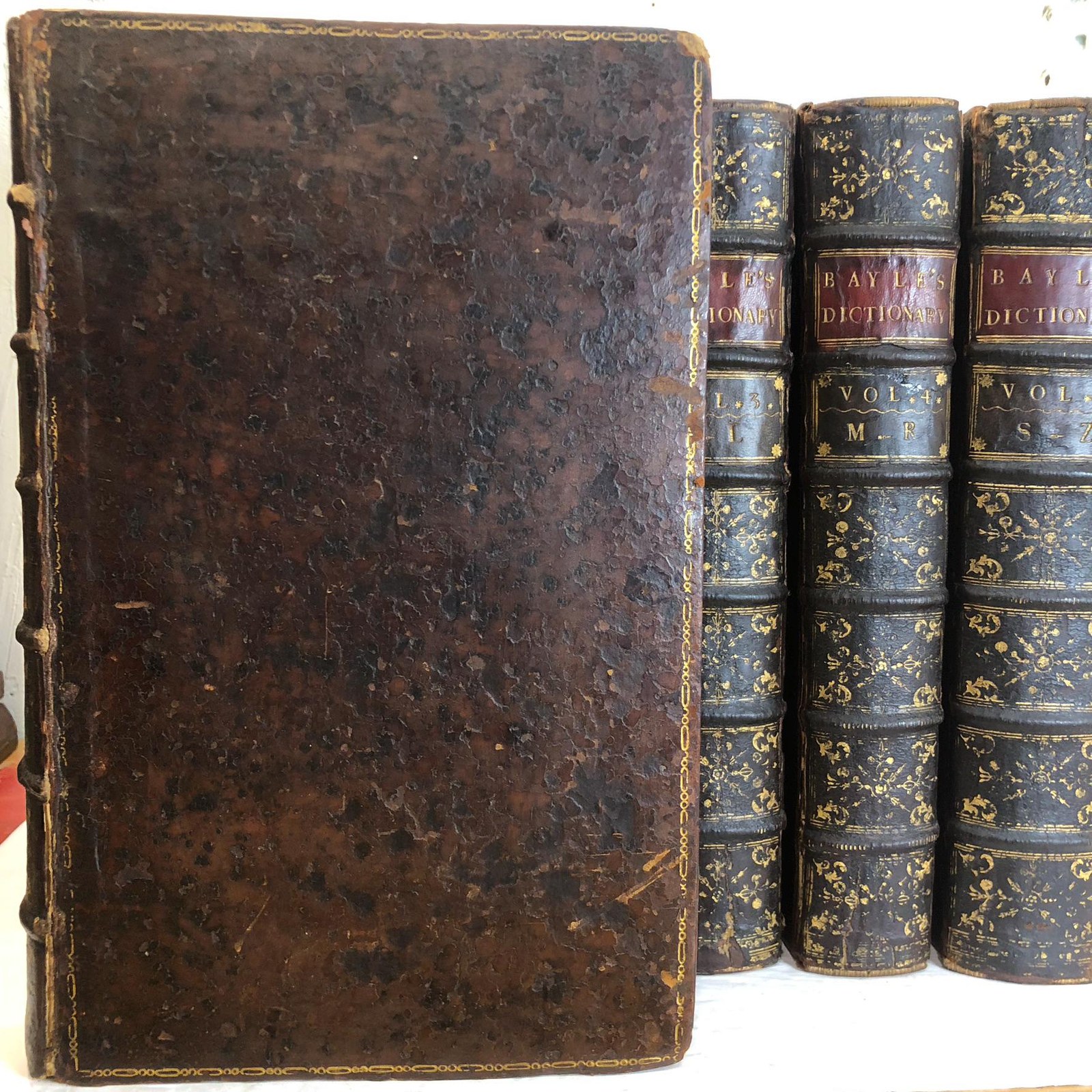
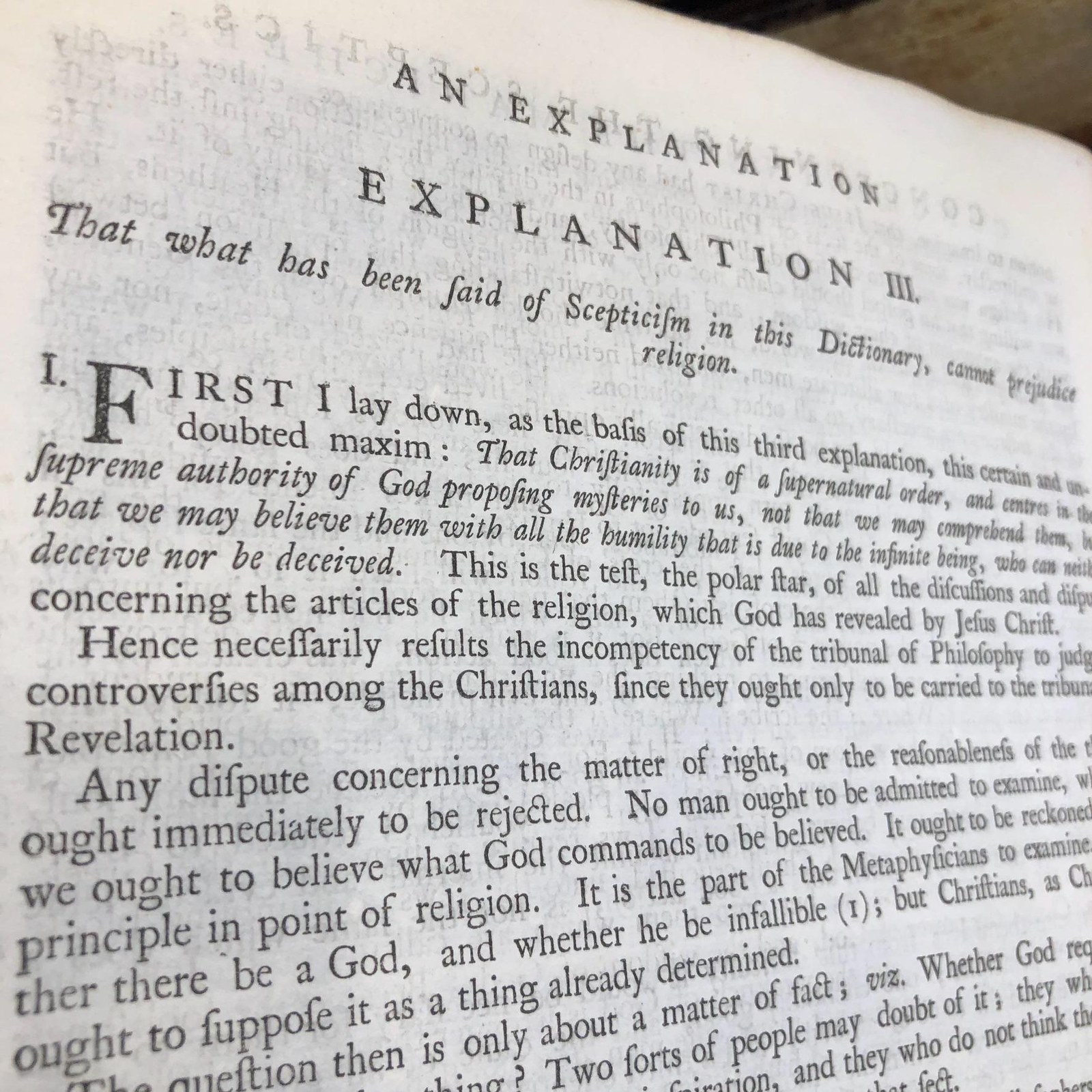
The Dictionary, Historical and Critical of Mr. Peter Bayle. The Second Edition, Carefully Collated, With the Several Editions of the Original; in Which Many Passages are Restored, and the Whole Greatly Augmented, Particularly with a Translation of the Quotations from eminent Writers in Various Languages. To which is Prefixed the Life of the Author, Revised, Corrected and Enlarged, by Mr. Des Maizeaux, Fellow of the Royal Society
Bayle, Peter · London
- Author
- Bayle, Peter
- Date
- 1734-38
- Place
- London
- Publisher
- Printed for J.J. and P. Knapton et al
- Language
- English
- Binding
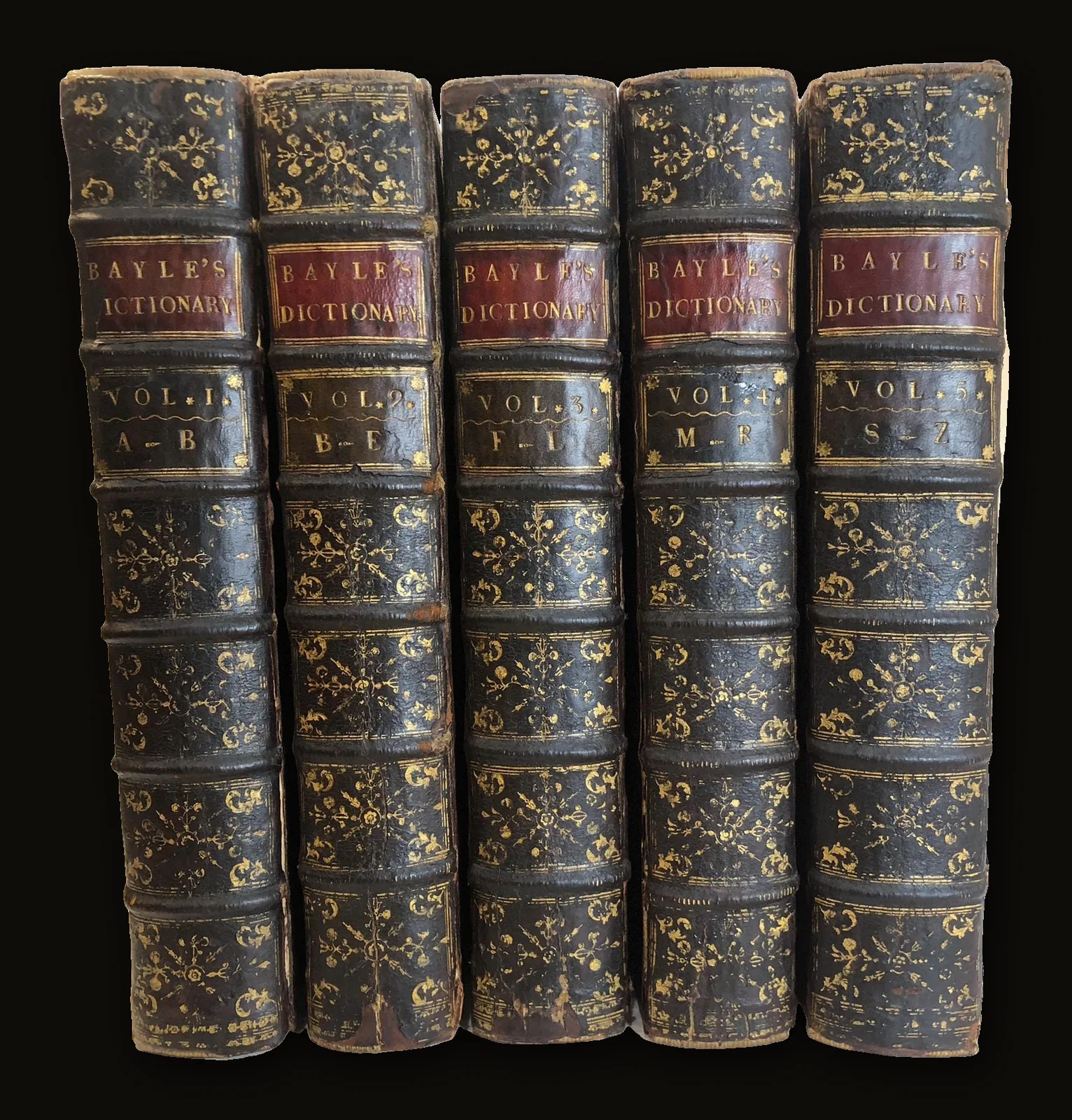
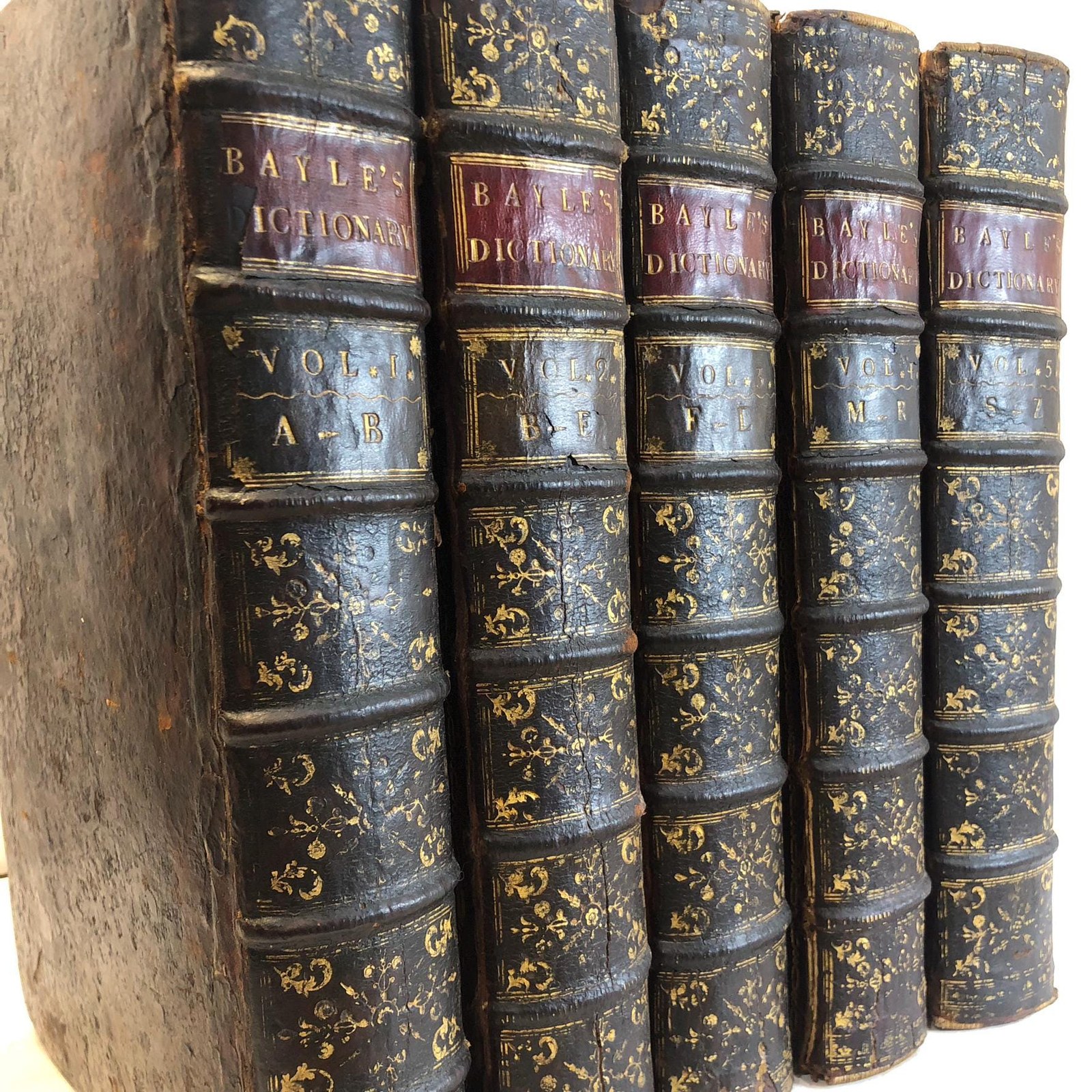
- Folio. (9" x 14.5") Period calf, stamped gilt ornamentation spines with raised bands, 2 spine labels, 1 red and 1 brown. Boards with rope gilt boarder. Title pages printed in red and black, head and tail pieces, decorated initials, etc.
- Format
- Per Printing in the Mind of Man 155b: "For over half a century, until the publication of the Encyclopedie, Bayle's Dictionnaire dominated enlightened thinking in every part of Europe". Pierre Bayle's Dictionary is effectively constituted one of the first encyclopaedias of ideas and their originators. In the Dictionary, Bayle expressed his view that much that was considered to be "truth" was actually just opinion, and that gullibility and stubbornness were prevalent. The Dictionary remains an important scholarly work for several generations after its publication. The majority of the entries are devoted to individual people, whether historical or mythical, though some articles treat religious beliefs and philosophies. Many of the more controversial ideas in the book were hidden away in the voluminous footnotes, or slipped into articles on seemingly uncontroversial topics. Pierre Bayle was a Huguenot scholar who fled from French religious intolerance to Geneva and Holland. Bayle's influential encyclopedia was a best-selling philosophical work of the 18th century. The Dictionnaire's influence can be seen on Diderot, Locke, Leibniz, Kant, Hume, Berkeley, among others. The work combined biography, history, literary criticism, theology, obscenity, in addition to philosophical treatments of toleration, the problem of evil, epistemological questions, etc. Bayle's extensive commentary propelled his reader's interest. (Although an avowed Christian by faith rather than by reason, Bayle's fideism approach to the question of God created the logical framework for an atheist worldview. Bayle pointed out contradictions between theological tenets and the supposedly self-evident dictates of reason, though at the same time sought to promote religious tolerance, and argued strongly against inflexible and authoritarian application of religious articles of faith. (The Standford Encyclopedia of Philosophy remarks that Bayle's most significant impact is on the impulse towards modern atheism.)
- Category
- Religion & Theology
- Record
- S.I.8142
The Dictionary, Historical and Critical of Mr. Peter Bayle. The Second Edition, Carefully Collated, With the Several Editions of the Original; in Which Many Passages are Restored, and the Whole Greatly Augmented, Particularly with a Translation of the Quotations from eminent Writers in Various Languages. To which is Prefixed the Life of the Author, Revised, Corrected and Enlarged, by Mr. Des Maizeaux, Fellow of the Royal Society. Five Volumes Complete.
Folio. (9" x 14.5")1734-38. Five Volumes. London: Printed for J.J. and P. Knapton, et al. Full period calf, stamped gilt ornamentation spines with raised bands, gilt lettering, 2 spine labels, 1 red and 1 brown. Boards with rope gilt border. Title pages printed in red and black, head and tail pieces, decorated initials, etc.
Per Printing in the Mind of Man 155b: "For over half a century, until the publication of the Encyclopedie, Bayle's Dictionnaire dominated enlightened thinking in every part of Europe". Pierre Bayle's Dictionary is effectively constituted one of the first encyclopaedias of ideas and their originators. In the Dictionary, Bayle expressed his view that much that was considered to be "truth" was actually just opinion, and that gullibility and stubbornness were prevalent. The Dictionary remains an important scholarly work for several generations after its publication. The majority of the entries are devoted to individual people, whether historical or mythical, though some articles treat religious beliefs and philosophies. Many of the more controversial ideas in the book were hidden away in the voluminous footnotes, or slipped into articles on seemingly uncontroversial topics. Pierre Bayle was a Huguenot scholar who fled from French religious intolerance to Geneva and Holland. Bayle's influential encyclopedia was a best-selling philosophical work of the 18th century. The Dictionnaire's influence can be seen on Diderot, Locke, Leibniz, Kant, Hume, Berkeley, among others. The work combined biography, history, literary criticism, theology, obscenity, in addition to philosophical treatments of toleration, the problem of evil, epistemological questions, etc. Bayle's extensive commentary propelled his reader's interest. (Although an avowed Christian by faith rather than by reason, Bayle's fideism approach to the question of God created the logical framework for an atheist worldview. Bayle pointed out contradictions between theological tenets and the supposedly self-evident dictates of reason, though at the same time sought to promote religious tolerance, and argued strongly against inflexible and authoritarian application of religious articles of faith. (The Standford Encyclopedia of Philosophy remarks that Bayle's most significant impact is on the impulse towards modern atheism.)
Condition
Very Good
Guaranteed authentic and as described · 7-day returns · free US shipping — our terms. Subject to prior sale.