Home · Catalogue · Religion & Theology · S.I.9378
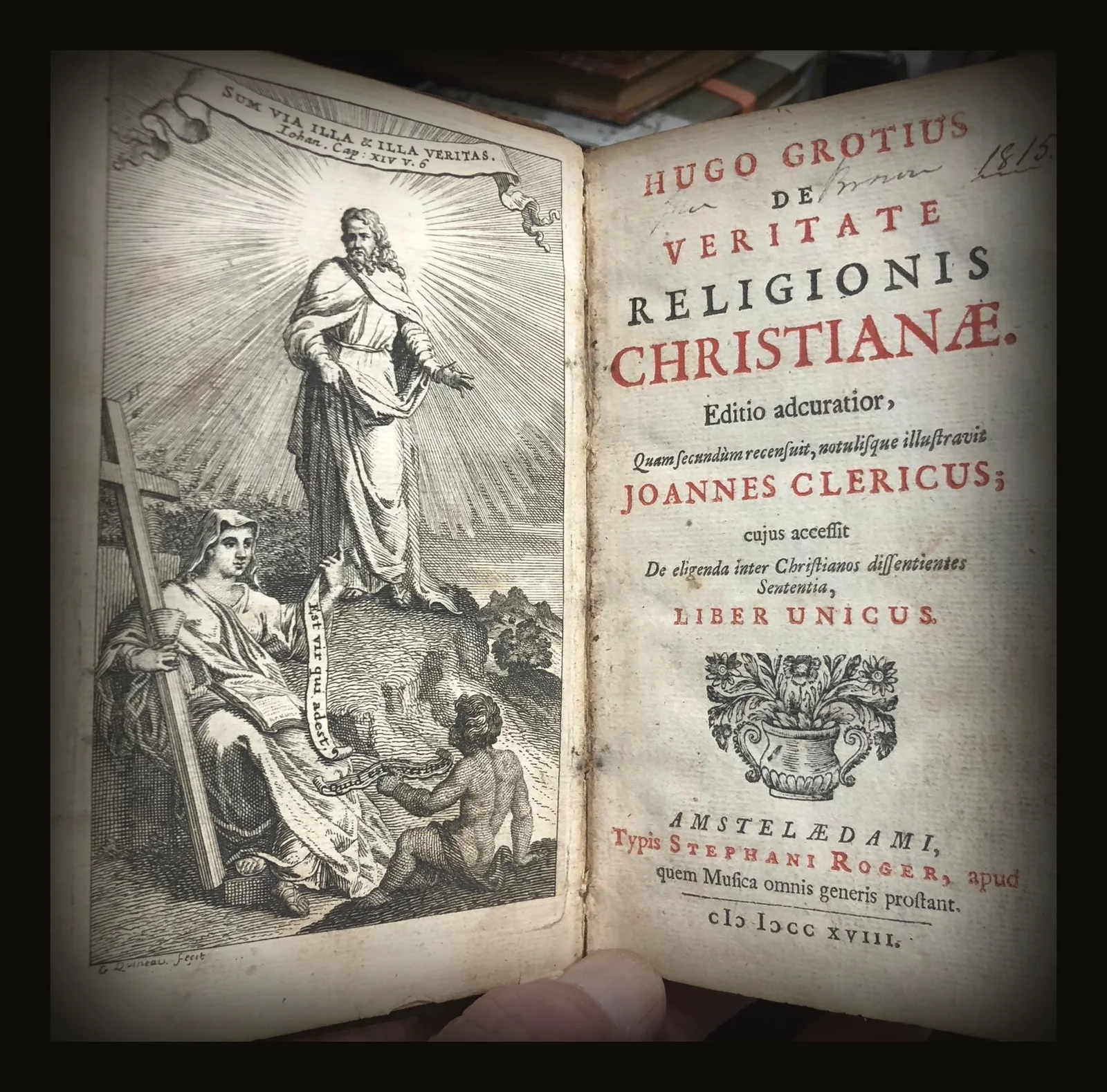
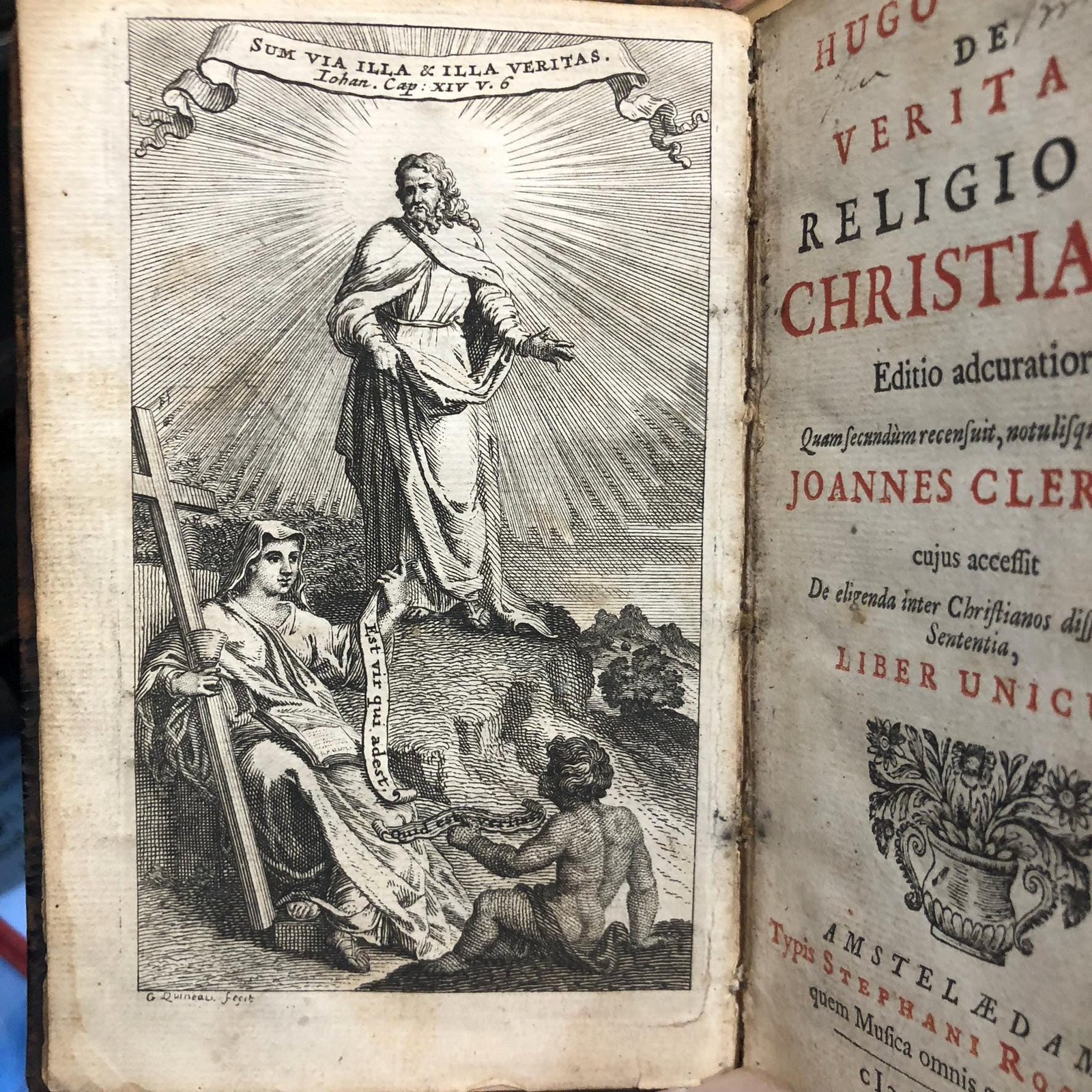
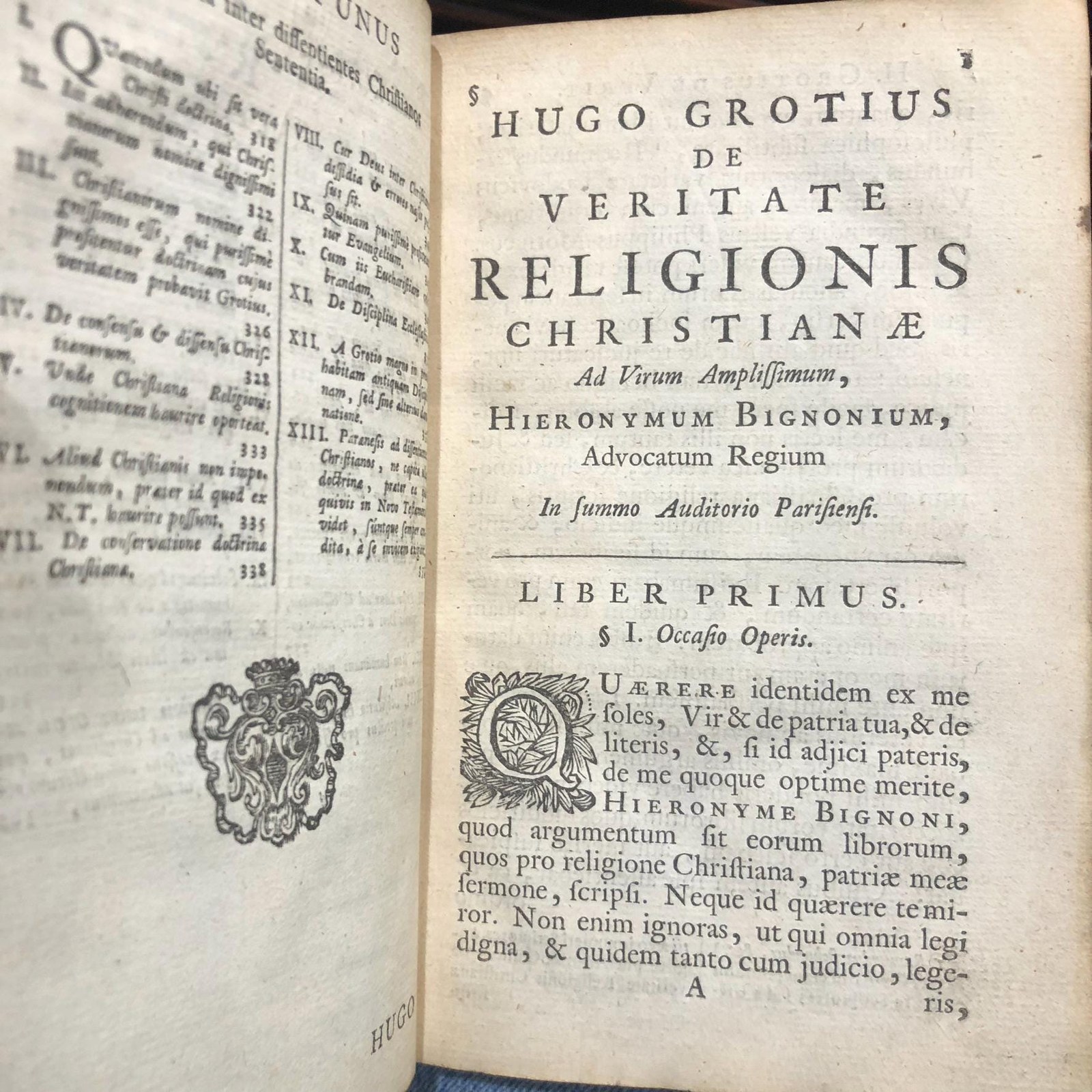
Hugo Grotius De Veritate Religionis Christianæ. Editio accuratior, Quam secundum recensuit, notulisque illustravit Joannes Clericus; cujus accessit De eligenda inter Christianos dissidentes Sententia, Liber Unicus. Translated: Hugo Grotius On The Truth Of The Christian Religion. A more accurate edition, Which has been revised a second time, and illustrated with notes by Johannes Clericus; to which has been added On choosing among Christians who disagree, An opinion, A single book.
Grotius, Hugo · Amsterdam
- Author
- Grotius, Hugo
- Date
- 1718
- Place
- Amsterdam
- Publisher
- Stephanus Roger
- Language
- English
- Binding
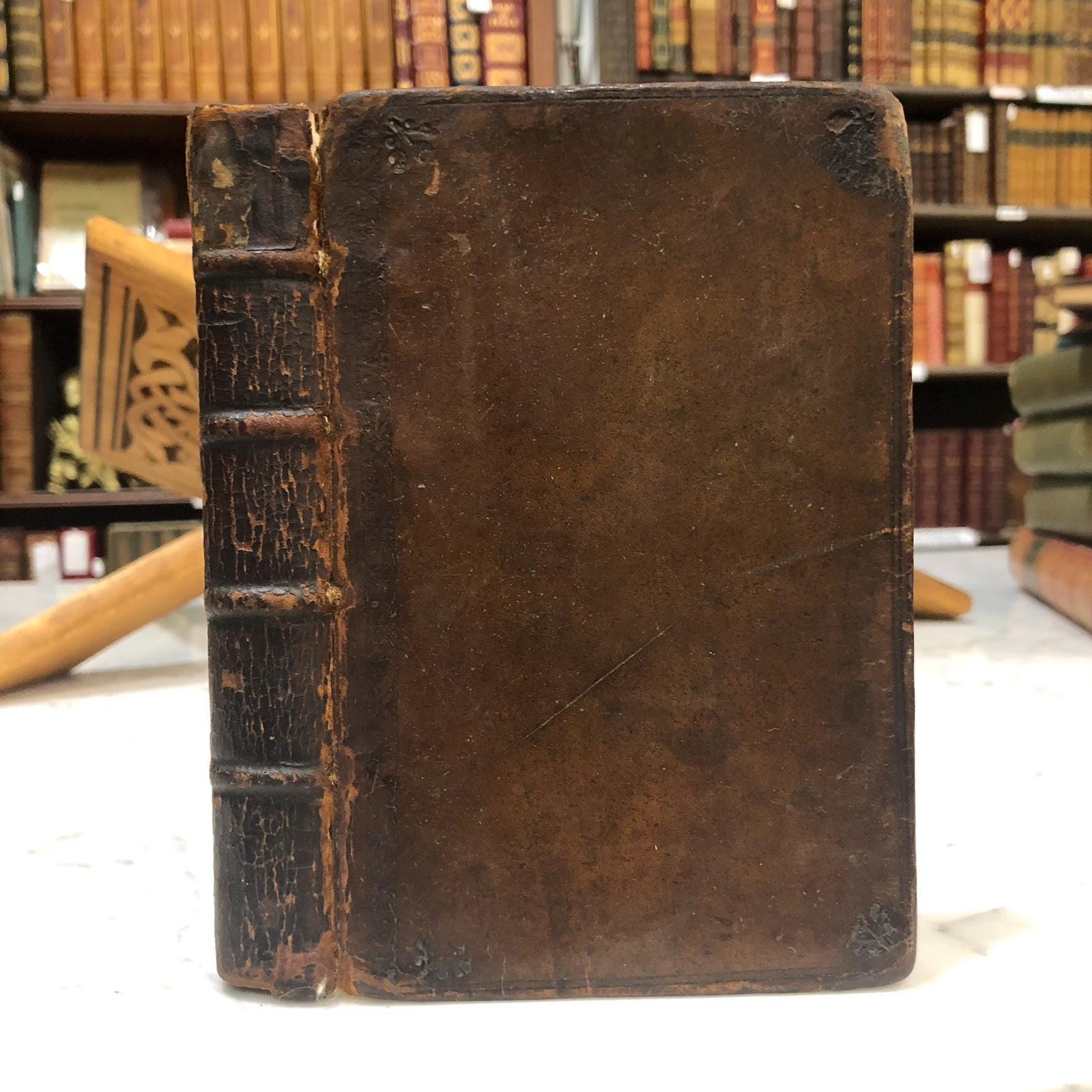
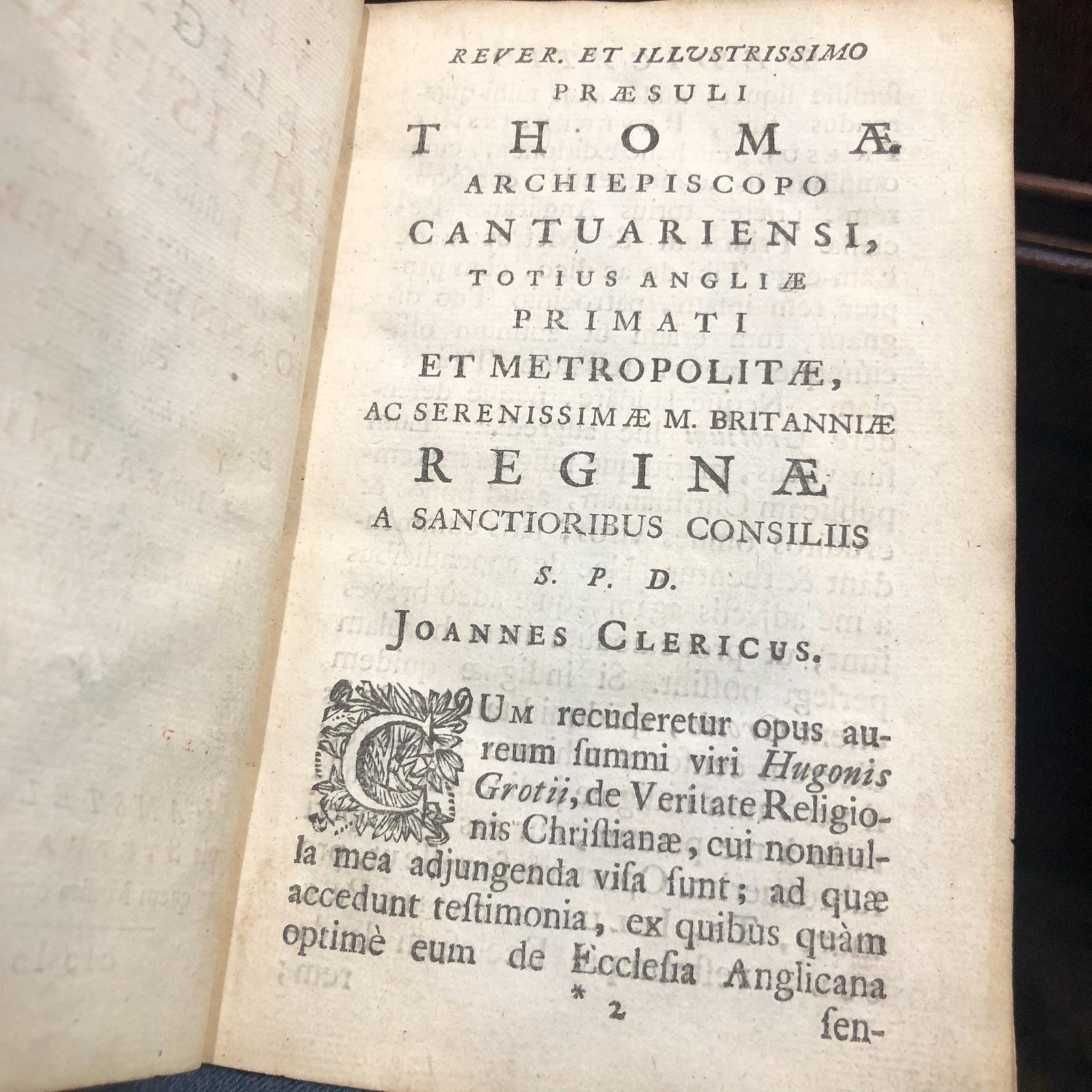
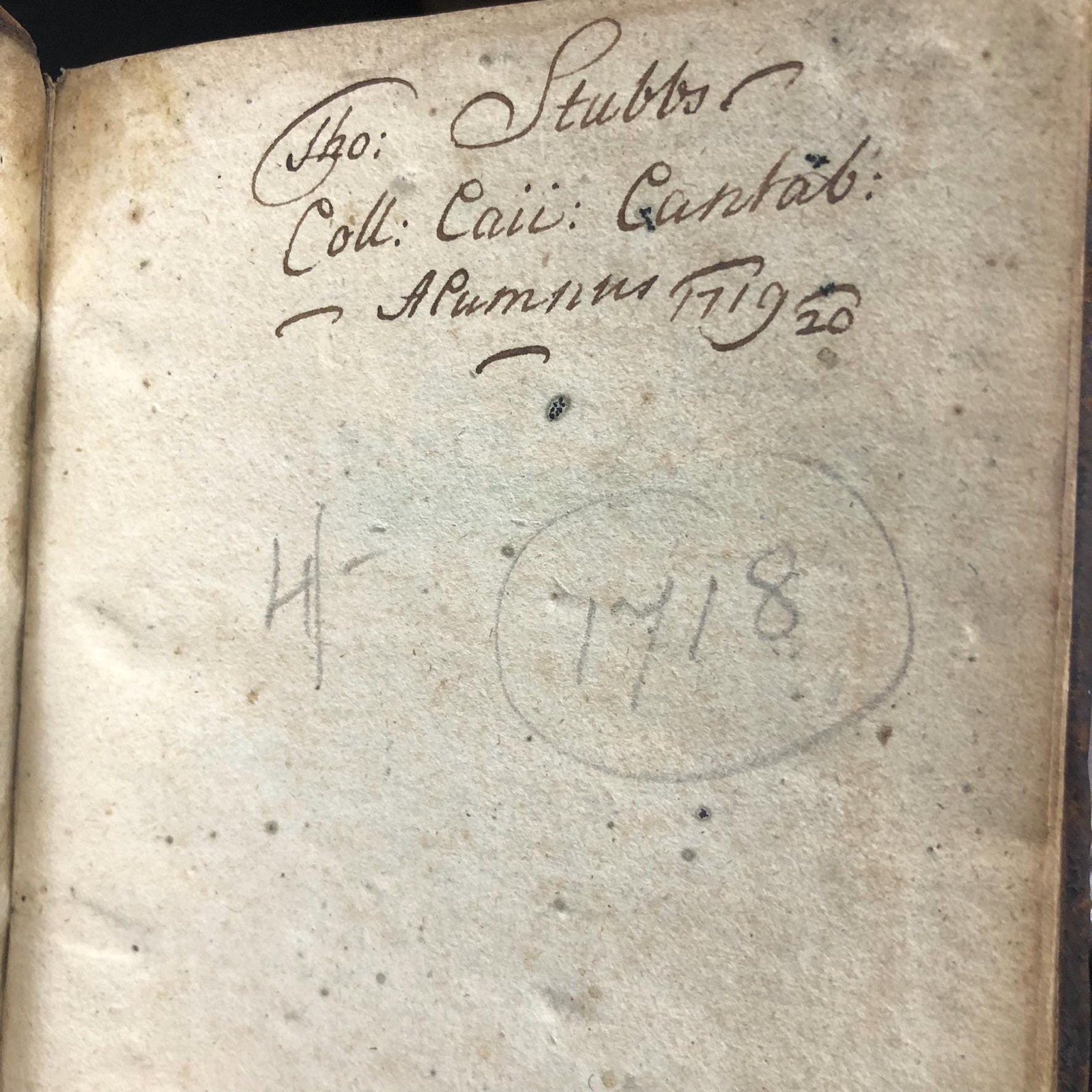
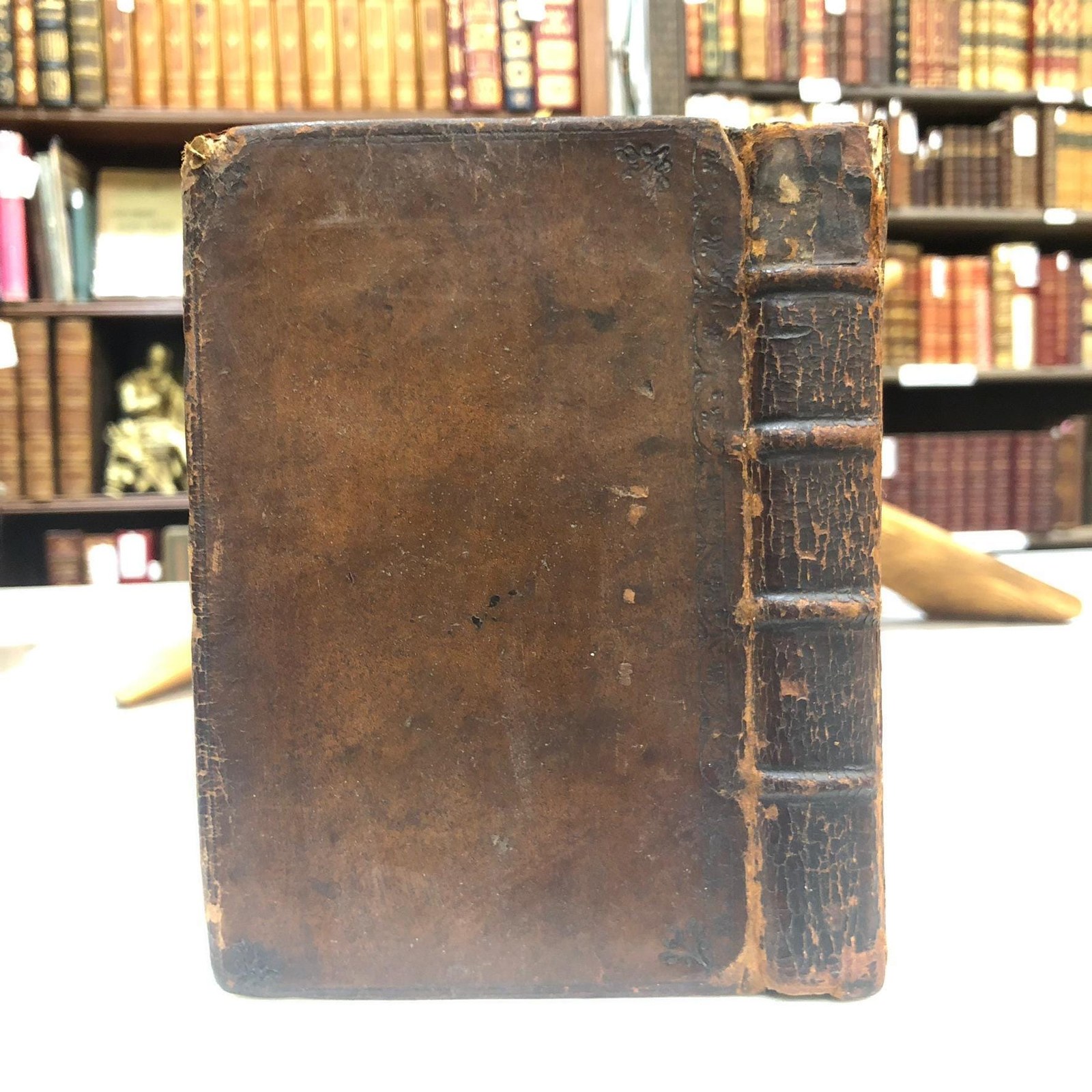
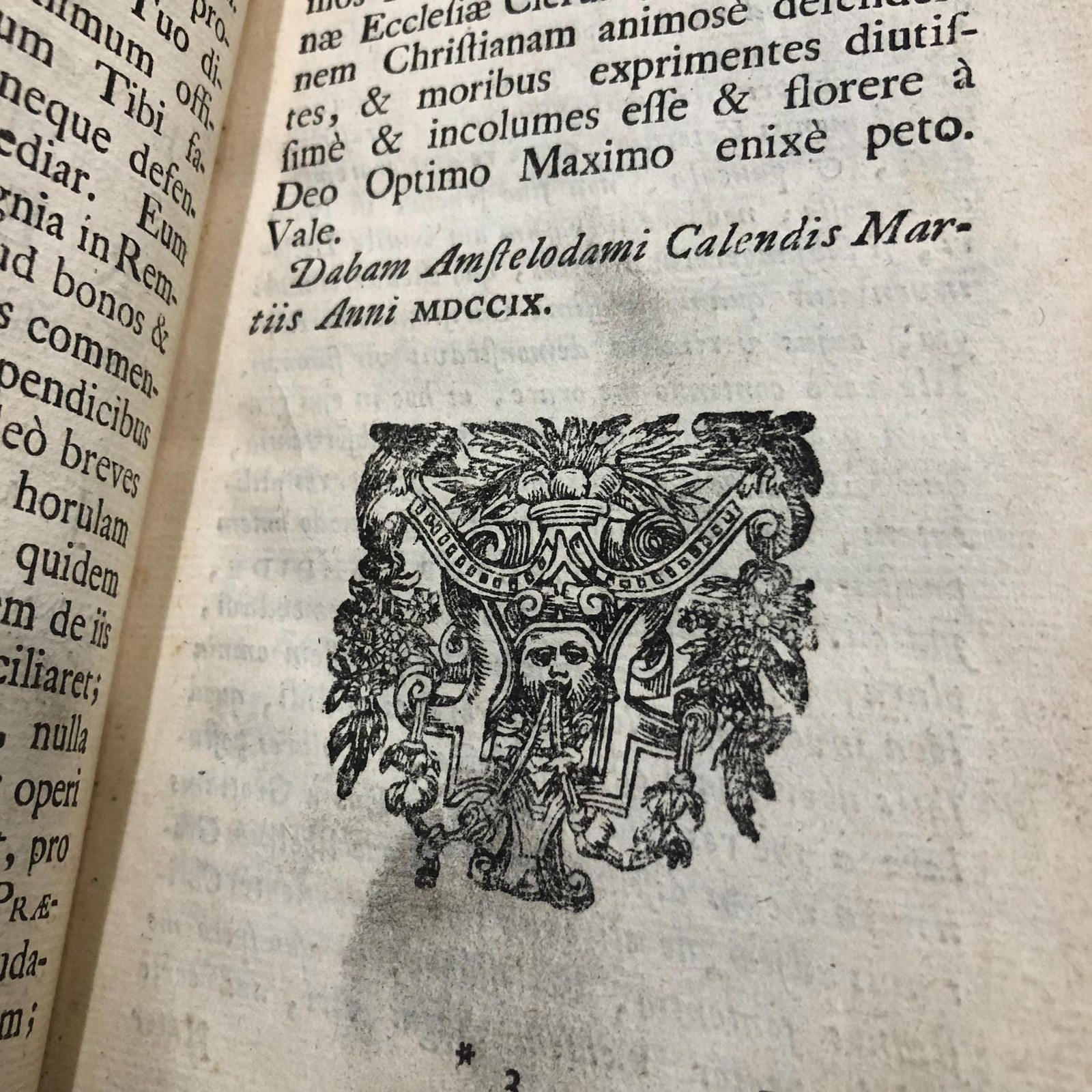
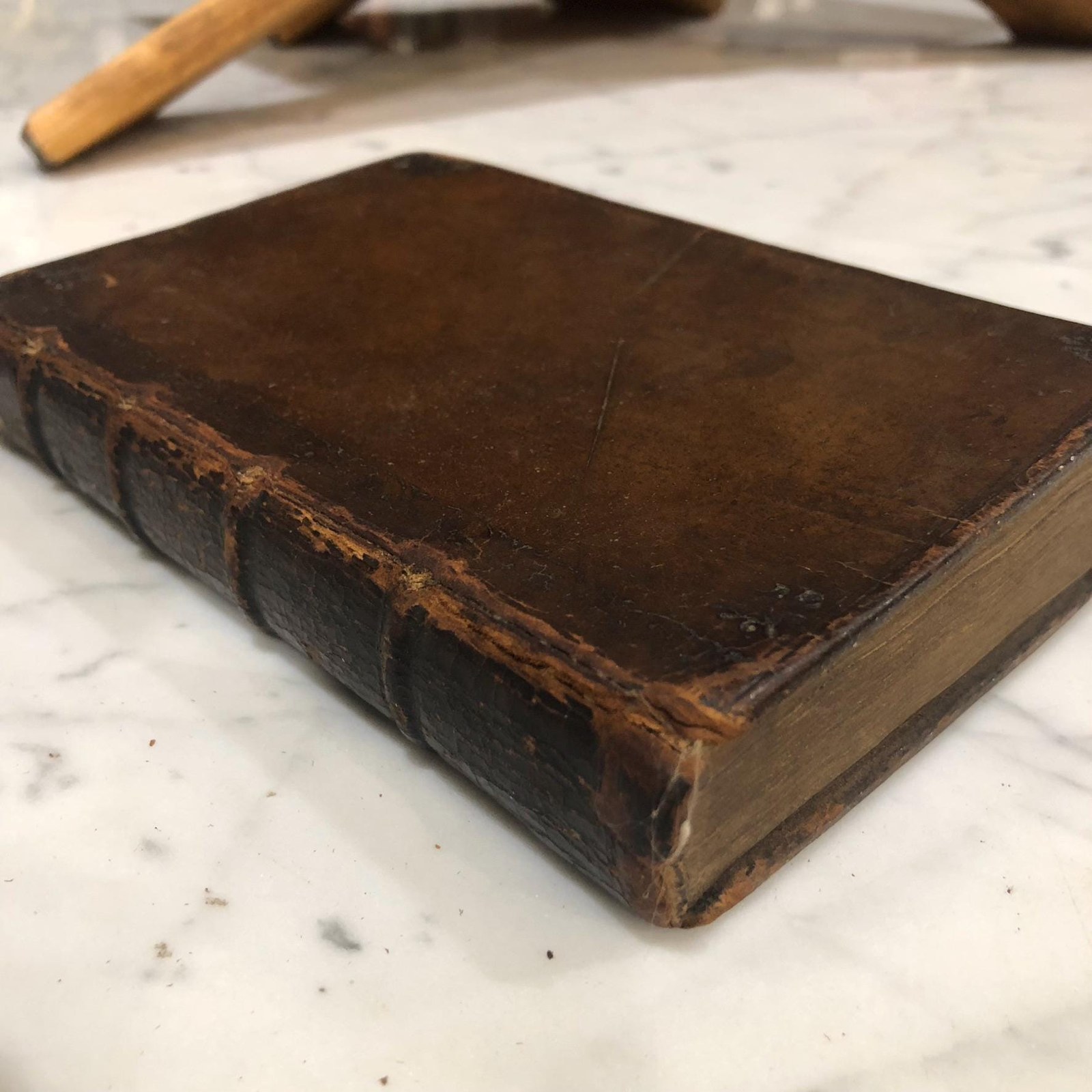
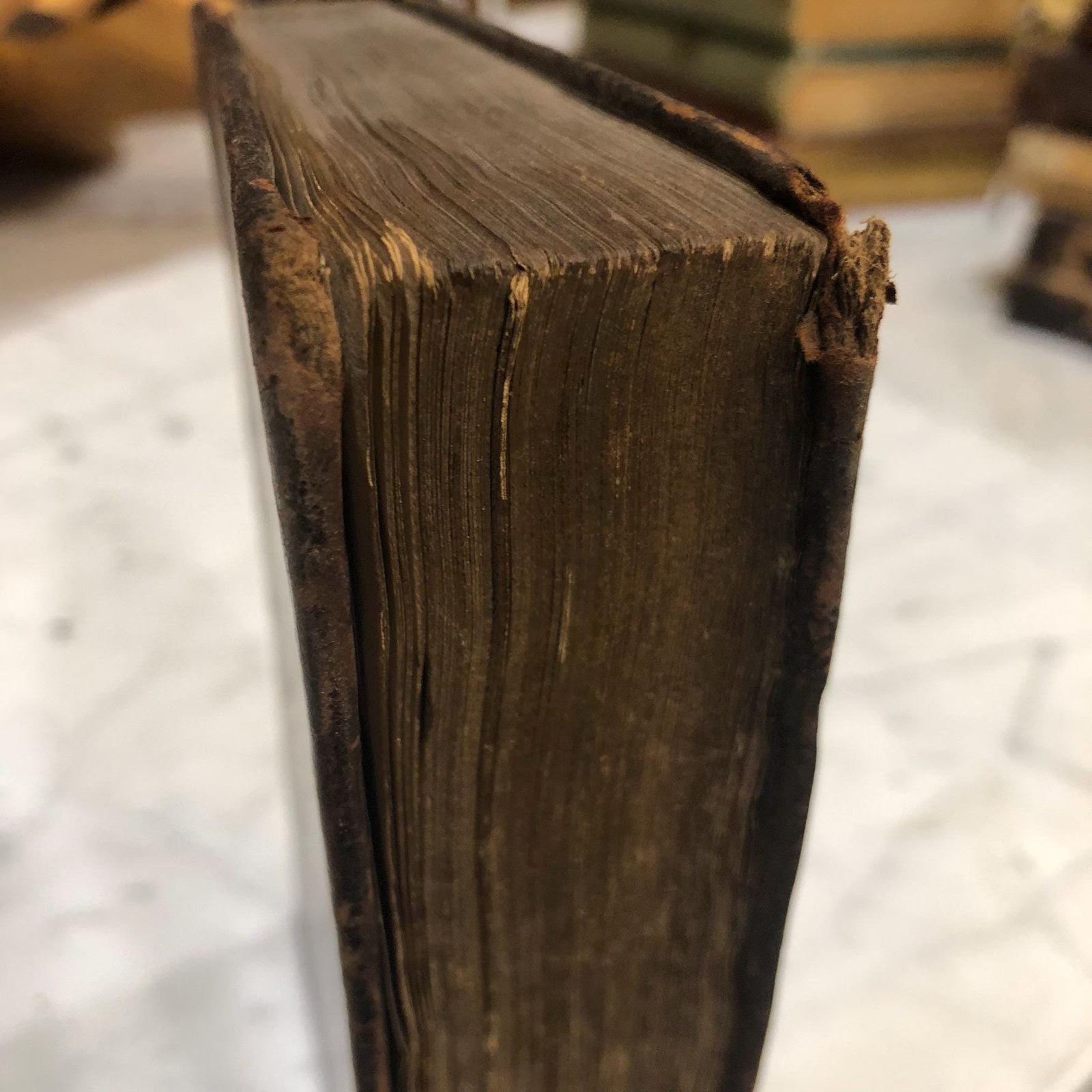
- 12mo.(4" x 6.125") 368 pp. Full brown mottled leather with blindstamp rule and decorative corners to both boards. Spine with four raised bands. Edgewear, corners bumped and rubbed, one through to board. Head and foot of spine chipped with small loss. Spine with craquelure, possibly lacking title label, panel closest to head chipped (see pic). Upper board tender, holding strong. Engraved frontispiece, title page in red and black ink. Text in Latin, notes in two columns in Latin and Greek.
- Format
- Hugo Grotius (/ˈɡroʊʃiəs/ GROH-shee-əss; 10 April 1583 – 28 August 1645), also known as Hugo de Groot[a] (Dutch: [ˈɦyɣoː də ˈɣroːt]) or Huig de Groot (Dutch: [ˈɦœyɣ də ˈɣroːt]), was a Dutch humanist, diplomat, lawyer, theologian, jurist, statesman, poet and playwright. A teenage prodigy, he was born in Delft and studied at Leiden University. He was imprisoned in Loevestein Castle for his involvement in the controversies over religious policy of the Dutch Republic, but escaped hidden in a chest of books that was regularly brought to him and was transported to Gorinchem. Grotius wrote most of his major works in exile in France. Grotius was a major figure in the fields of philosophy, political theory and law during the 16th and 17th centuries. Along with the earlier works of Francisco de Vitoria and Alberico Gentili, his writings laid the foundations for international law. Two of his books have had a lasting impact in the field: De jure belli ac pacis (On the Law of War and Peace) dedicated to Louis XIII of France and the Mare Liberum (The Free Seas) for which Grotius has been called the "father of international law." Grotius has also contributed significantly to the evolution of the notion of rights. Before him, rights were, above all, perceived as attached to objects; after him, they are seen as belonging to persons, as the expression of an ability to act, or as a means of realizing something.
- Category
- Religion & Theology
- Record
- S.I.9378
Hugo Grotius De Veritate Religionis Christianæ. Editio accuratior, Quam secundum recensuit, notulisque illustravit Joannes Clericus; cujus accessit De eligenda inter Christianos dissidentes Sententia, Liber Unicus. Translated: Hugo Grotius On The Truth Of The Christian Religion. A more accurate edition, Which has been revised a second time, and illustrated with notes by Johannes Clericus; to which has been added On choosing among Christians who disagree, An opinion, A single book. 12mo.(4" x 6.125") 1718. 368 pp. Amsterdam: Stephanus Roger. Full brown mottled leather with blindstamp rule and decorative corners to both boards. Spine with four raised bands. Edgewear, corners bumped and rubbed, one through to board. Head and foot of spine chipped with small loss. Spine with craquelure, possibly lacking title label, panel closest to head chipped (see pic). Upper board tender, holding strong. Engraved frontispiece, title page in red and black ink. Text in Latin, notes in two columns in Latin and Greek. Hugo Grotius (/ˈɡroʊʃiəs/ GROH-shee-əss; 10 April 1583 – 28 August 1645), also known as Hugo de Groot[a] (Dutch: [ˈɦyɣoː də ˈɣroːt]) or Huig de Groot (Dutch: [ˈɦœyɣ də ˈɣroːt]), was a Dutch humanist, diplomat, lawyer, theologian, jurist, statesman, poet and playwright. A teenage prodigy, he was born in Delft and studied at Leiden University. He was imprisoned in Loevestein Castle for his involvement in the controversies over religious policy of the Dutch Republic, but escaped hidden in a chest of books that was regularly brought to him and was transported to Gorinchem. Grotius wrote most of his major works in exile in France. Grotius was a major figure in the fields of philosophy, political theory and law during the 16th and 17th centuries. Along with the earlier works of Francisco de Vitoria and Alberico Gentili, his writings laid the foundations for international law. Two of his books have had a lasting impact in the field: De jure belli ac pacis (On the Law of War and Peace) dedicated to Louis XIII of France and the Mare Liberum (The Free Seas) for which Grotius has been called the "father of international law." Grotius has also contributed significantly to the evolution of the notion of rights. Before him, rights were, above all, perceived as attached to objects; after him, they are seen as belonging to persons, as the expression of an ability to act, or as a means of realizing something.
Condition
Very Good
Guaranteed authentic and as described · 7-day returns · free US shipping — our terms. Subject to prior sale.